
GBGB publishes track injury and retirement data for past year

THE GBGB has published track injury and retirement data for 2025, the sport’s regulator additionally presenting the data to Defra (Department for Environment, Food & Rural Affairs).
The GBGB says the figures offer compelling evidence that effective regulation works and plays a vital role in safeguarding the health and wellbeing of racing greyhounds with data for 2025 confirming a long-term transformation in welfare standards, showing that recent gains are both significant and sustainable.
Landmark initiatives such as the Greyhound Commitment (2018) and the long-term welfare strategy, ‘A Good Life for Every Greyhound’ (2022) were designed to raise welfare standards across the sport.
Last year, 5,186 greyhounds retired from the sport with 3,532 moving straight into a homing centre at the point of retirement – an increase on 2024.
This positive trend means fewer greyhounds were retained by their racing trainers while they waited for a homing place to become available; 882 were retained in 2025 compared to 1,618 in 2024.
The fact that this number has almost halved is due to the success of GBGB’s Greyhound Retirement Scheme (GRS) which attaches a £420 bond - paid for jointly by the racing owner and GBGB – to each greyhound.
This bond is given to an approved homing centre when a retired greyhound enters their care and is used to cover the costs of the greyhound’s stay with them.
Since the GRS was launched in 2020, more than £7 million has been paid to over 100 homing centres to care for almost 17,500 greyhounds.
GBGB has also run a successful homing campaign to promote retired greyhounds as great pets which has seen celebrity endorsement from former-England rugby star Joe Marler and TV personality Chris Hughes.
GBGB records all injuries which occur at its tracks. Over the course of 2025, out of 330,836 runs, 98.9% took place without incident.
The injury rate was 1.1% which is in line with previous years and in the majority of cases, the greyhound fully recovered.
The euthanasia rate at the racecourse was 0.05% - a slight increase from 2024 when the rate was 0.03% - the GBGB has committed to identifying and reducing all avoidable risks for greyhounds and put in place a Fatality Review process which automatically takes place following every single mortality at a racecourse.
 Jonathan Kay
The process, which is similar to the one implemented across licensed horseracing since 2024, will ensure GBGB is immediately aware of any potential contributing factors related to the incident and can make recommendations to further improve safety.
The data also shows significant improvements on other measures most notably:
- A 99% drop in the number of greyhounds put to sleep on economic grounds since 2018;
- An 82% decrease since 2018 in the number of greyhounds put to sleep because they were designated ‘unsuitable for homing’.
With over 200 Rules of Racing, racing greyhounds receive far more protection than domestic pets. Moreover, as the only UK sport to have UKAS accreditation, licensed greyhound racing continues to meet independently assessed, internationally recognised welfare and operational standards.
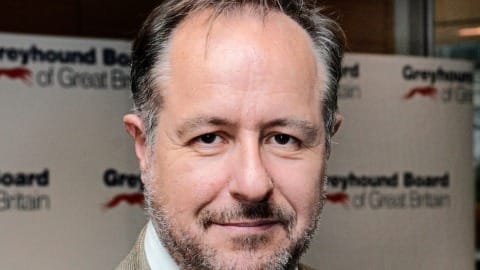
Commenting on the data, Mark Bird, chief executive of the GBGB, said: “Yet again, this data provides unequivocal evidence that welfare standards have seen a seismic shift since the launch of our Greyhound Commitment and long-term Welfare Strategy.
"Whilst the data shows some annual fluctuations, the clear trend since 2018 is of significant improvements on every measure.
“It is particularly encouraging to see continued improvements in the number of greyhounds moving onto homing centres and then domestic, ‘forever’ homes.
"Like many animal welfare organisations, we felt the impact of the post-Covid rehoming crisis.
"However, through additional funding from the Greyhound Retirement Scheme and a highly-successful marketing campaign, we are now seeing greyhounds move more quickly into homing centres, where they continue their preparation for domestic life and from which they are found suitable homes in which to enjoy happy and healthy retirements.
“We are disappointed by the 0.02 percentage point increase in the euthanasia rate at the racecourse this year which bucks the general downward trend since 2018.
"Having looked very carefully at the factors which might have caused this, we have introduced a number of mitigating measures. These are being supported by enhanced data collection designed to identify trends early so that remedial action can immediately be implemented when needed.
“Our commitment to continuous improvement remains steadfast and we will always be driven by the latest scientific and veterinary research to enhance welfare standards across the sport.
"Whilst discussions around the need for greater financial support from bookmakers are on-going, the current delivery of GBGB’s welfare strategy remains funded and within budget.
“With greyhound racing used as a political football in Scotland and Wales, it has not been an easy year for the greyhound community.
"However, as we approach the sport’s centenary next month, we are looking forward to celebrating all that our sport has achieved and what more it has to offer.
"As today’s data shows, it is a sport fit for the 21st century which puts greyhound welfare at its heart.
“As always, I want to thank everyone across our sport for their tireless efforts and their unwavering commitment to putting the health and wellbeing of our greyhounds above all else.”

Sir Philip Davies, chairman of the GBGB, said: “The publication of this data, the detail of which goes far beyond Defra’s requirements, is clear evidence of the strength and accountability of a properly regulated sport.
"It demonstrates licensed greyhound racing’s commitment to transparency, integrity and the highest welfare standards for racing greyhounds throughout their lives in the sport.
“Those who seek to undermine greyhound racing often ignore the protections, oversight and scrutiny that regulation provides. This data shows exactly why strong governance matters.
"Without clear rules, enforceable standards and independent oversight, greyhounds would not benefit from the safeguards and welfare measures that exist across licensed racing today.”
Notes:
- The data was collated and analysed by GBGB before being sent to our independent auditor, Barnes Roffe Advisory Ltd, who carried out certain verification procedures on the underlying data in accordance with an agreed upon procedures engagement conducted in line with International Standard on Related Services (ISRS) 4400.
- 75% of GBGB’s annual income is spent on supporting welfare across the sport.
- In 2022, under the direction of Professor Madeleine Campbell, GBGB developed its long-term welfare strategy, ‘A Good Life for Every Greyhound’. Since its launch, all the short and medium initiatives have been implemented and the long-term objectives are currently being delivered upon. The latest Welfare Strategy update can be found here.